

A token approval can remain active long after the trade that created it is over. That is the counterintuitive part of using DeFi: disconnecting a wallet from a website does not necessarily remove the on-chain permission the website’s contract received. For a US user moving between networks, protocols, and browser tabs, approvals can accumulate quietly across chains. The useful question is not simply, “Is this wallet connected?” It is, “Which contracts can move which tokens, on which network, and for how much?”
Consider a familiar scenario. You use a decentralized exchange on one network, approve a token for a swap, then bridge assets and try a lending app elsewhere. Months later, the first app is no longer part of your routine. The approval may still exist. A multi-chain wallet can make it easier to inspect and manage these permissions, but it cannot make a risky authorization harmless. Understanding the distinction between a wallet connection and a token allowance is the first step toward a practical approval habit.
What an approval actually authorizes
On many EVM-compatible networks, tokens follow an allowance model. A token holder grants a spender—often a protocol contract—the right to transfer up to a specified amount of a particular token. The approval is recorded by the token contract on that network. A later swap or deposit can then use that permission without asking for a new approval every time.
This is different from connecting a wallet to a website. A connection generally lets an app request information such as a public address and ask the user to sign transactions. An allowance is an on-chain permission with its own consequences. Closing a tab, disconnecting the site, or removing the browser extension does not automatically change it. Revoke or reduce the allowance through an appropriate transaction if you want to change that on-chain permission.
The allowance is also narrower than it may sound: it usually applies to a specific token and spender on a specific chain. It does not, by itself, authorize that contract to take every asset in the wallet or operate across all networks. But an unlimited allowance can let the spender transfer any amount of that token up to the wallet’s available balance, subject to the token’s mechanics. That makes the spender’s security and the scope of the permission important.
A small case with a large lesson
Suppose a user approves a stablecoin for a swap on one network and chooses the “unlimited” option because it avoids a repeat approval transaction later. The swap completes. The user then forgets about that app and moves to another chain. Nothing in this sequence means the old contract has become malicious, and an unused allowance is not proof of a compromise. The exposure is conditional: if the approved spender is exploited, compromised, or otherwise behaves unexpectedly, a still-valid allowance may increase what it can take.
Here is the less obvious point: the practical risk is shaped by several layers, not just the number displayed in an approval screen. It depends on the spender address, the token contract, the chain, the allowance amount, and whether the spender’s code or control environment changes in a way that matters. A familiar protocol name is not a substitute for checking the address and network. Nor does a small allowance guarantee safety if the user later signs another transaction that broadens access.
Approvals are therefore best treated as an inventory of permissions, not as a list of bad transactions. Some are useful and intentionally persistent. Others may be obsolete. The task is to distinguish what remains necessary from what is merely still authorized.
Why multi-chain management is harder than it looks
A wallet that supports several networks presents a coherent interface, but the blockchains remain separate systems. An approval on one network generally does not carry over to another. As a result, a user can have a tidy wallet screen and still have permissions scattered across chains, each requiring its own review and, where needed, its own transaction to change.
There is also a cost and convenience trade-off. A limited approval reduces the amount a spender can draw under that allowance, but may require another approval transaction when the user wants to trade again. An unlimited approval can reduce friction and may avoid repeated transaction costs, but leaves a broader permission in place. Neither choice is universally correct: the decision depends on how often the app is used, the value and type of token, the chain’s transaction costs, and the user’s tolerance for persistent authorization.
Some wallets provide approval visibility or warnings as part of transaction review. These features can help users notice permissions before signing, but they do not remove the need to understand what is being authorized. Interface labels can simplify complex contract behavior, and support may vary by network or token. Treat wallet prompts as useful risk-reduction tools, not as a guarantee that every contract or edge case has been fully assessed.
Compare the main approaches
Approve only what you need
A limited allowance follows the principle of least privilege: grant a contract only the access needed for the intended action. This can constrain potential loss if the spender is later abused. The cost is more interaction. You may need to approve again, pay another transaction fee, and verify that the new request is actually for the protocol you intend to use.
Use unlimited approvals selectively
Unlimited approvals are convenient for recurring activity, especially when transaction fees or repeated prompts are burdensome. They are also persistent and broad. A reasonable compromise is not to ban them categorically, but to reserve them for contracts you use regularly and have independently verified, while reviewing them periodically. Confidence is not permanent: protocol upgrades, administrative changes, or security incidents can alter the context in which an old permission matters.
Revoke unused permissions
Revocation removes or reduces an allowance through an on-chain transaction, where the token and network support the relevant operation. This can shrink exposure from old permissions, but it is not a free or universal cleanup button. It costs a transaction, may require changing networks, and can be confusing if several token contracts or spenders appear similar. Revoking an allowance also does not undo a transaction that already happened, recover stolen assets, or secure a compromised wallet.
A repeatable review method
When reviewing approvals, begin with the network rather than the protocol brand. Confirm the chain, token, spender address, and allowance amount. Ask whether you still use that application and whether the permission is proportionate to that use. If the answer is unclear, pause rather than signing a transaction simply to clear a warning. For meaningful balances, verify addresses through trusted sources and take care with search results or unsolicited support messages.
Then choose a permission level deliberately. For a one-time interaction, a limited approval may be worth the extra step. For frequent use, a broader allowance may be a conscious convenience choice—but record it mentally as an ongoing permission, not a one-time setup detail. Periodic reviews are more useful than trying to revoke everything indiscriminately, particularly when some permissions support routine activity.
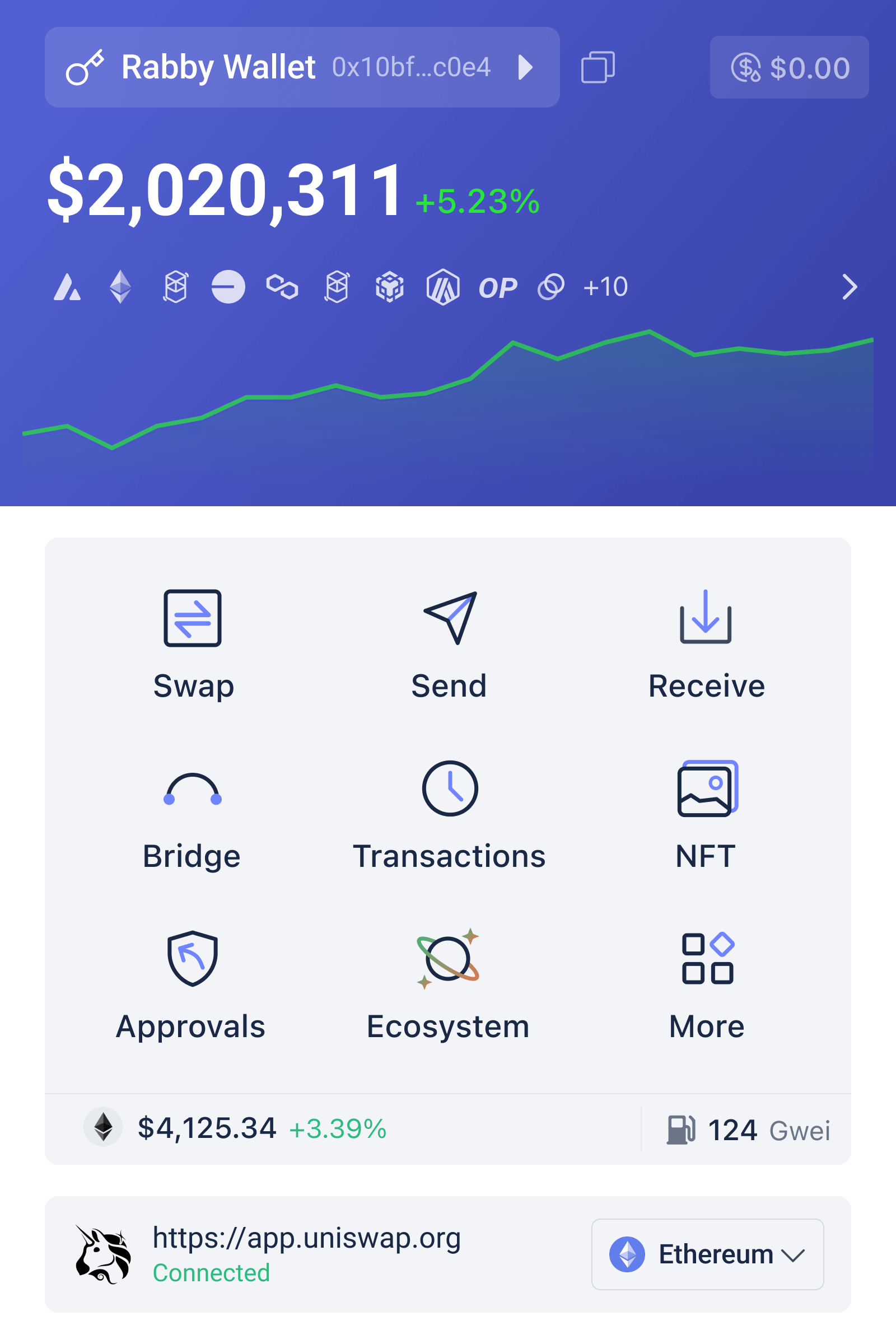
For users installing a wallet extension, obtain it through a source you can verify and check the extension’s identity before importing or creating a wallet. If you are researching the rabby wallet download process, treat installation and approval management as separate security steps: a wallet interface can help you inspect transactions, while your choices about permissions still determine what you authorize. Never enter a recovery phrase into a website or share it with someone claiming to provide support.
What the recent privacy disclosure does—and does not—tell you
A Chrome Web Store disclosure dated September 1, 2026, says Rabby Wallet has disclosed information about data collection and use, with further details in the developer’s privacy policy. That is relevant context for people assessing a browser extension, but the available notice does not specify the data categories or establish how approval management works. It should not be treated as proof that on-chain allowances are safer or riskier. Privacy practices and token permissions are separate questions: one concerns data handling, the other concerns authority over assets.
For US users, this distinction is practical. Browser-extension privacy disclosures can inform a decision about software, while on-chain transactions can create persistent permissions regardless of where the user lives. Review both, but do not let a reassuring impression in one area stand in for scrutiny in the other. The details of a privacy policy, wallet behavior, and supported chains can change; check current information when installing or updating software.
FAQ
Does disconnecting a DeFi app revoke its token approval?
No. Disconnecting typically ends the app’s access to the wallet connection, not the token contract’s recorded allowance. Review and change the allowance separately if you no longer want it in place.
Should I revoke every approval I do not recognize?
First identify the chain, token, and spender, using a reliable source where possible. An unfamiliar label alone is not enough to determine whether an allowance is malicious. If you cannot verify a permission or no longer need it, consider reducing or revoking it, while accounting for transaction fees and confirming the action before signing.
Does using a multi-chain wallet make approvals cross-chain?
No. A wallet may display assets and activity across networks, but allowances are generally recorded separately on each chain. Reviewing one network does not establish that permissions on another have been cleared.
The most useful mental model is simple: a wallet connection is an active conversation with an app; a token approval is a standing permission recorded on a particular chain. Manage the second with the same care you would give any lasting authorization. Convenience may justify a broader allowance, but only when the spender, network, and continuing need are understood.
Recent Comments